
Text
The classic front and back, or reversible to revise both ways.
Android, version 0.1.26
Every card comes back to you just before you would forget it. That is the whole principle of spaced repetition, and that is what the app does.
Define a function that returns the square of n?
Click to flip
Define a function that returns the square of n?
def square(n):
    return n * n
Rate the card, the app picks the next date.
The app schedules your revisions with FSRS, the reference algorithm in spaced repetition. A card you have mastered comes back in a long while, a fragile one comes back soon. You have nothing to configure for this to work.
The same card, rated “Good” every time
Typical intervals
Four directions for Again, Hard, Good and Easy. The buttons stay there if you prefer them. In practice, a session is done with one thumb.
Target retention rate, daily cap, maximum interval. If the defaults suit you, leave them alone.
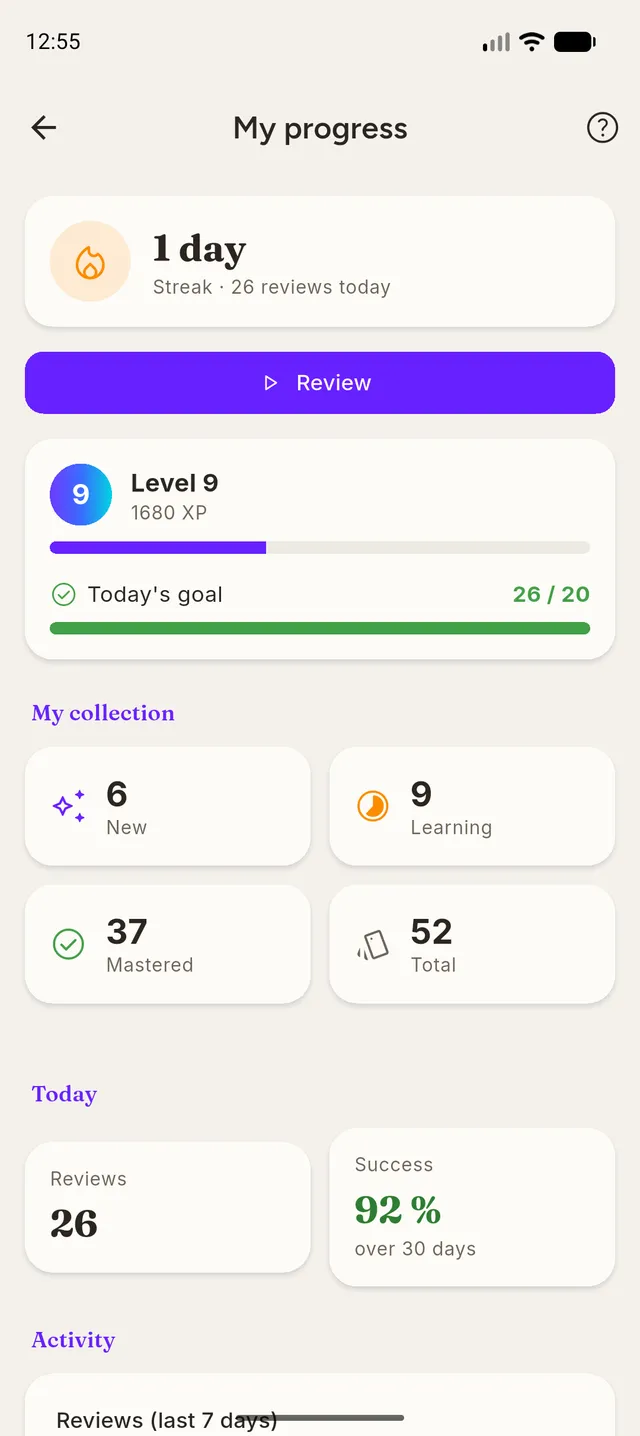
Revision history, workload forecast for the coming days, cards that are new, learning and mastered. Nothing gamified to excess.
Front and back, or reversible, as you like. Every card goes through the same scheduling engine.
The classic front and back, or reversible to revise both ways.
A photo, a diagram, a painting. The card carries the image full width.
Record the pronunciation from your phone, or import a file.
Hide one or several words in a sentence and recall them from memory.
Hide areas of a diagram, one at a time. Ideal for anatomy or cartography.
Several options, one right answer. The rating stays the same.
The content comes from people who wrote it. That is a choice, not a technical limit. No ads, no invasive tracking, and the core of the app stays free.
No banners, no video to watch before you can carry on.
No card generation. What you revise was written by someone.
The bare minimum needed to fix bugs, nothing sold on.
Revising, creating, sharing. That foundation will not move behind a payment.
Screenshots from version 0.1.26. Scroll sideways.
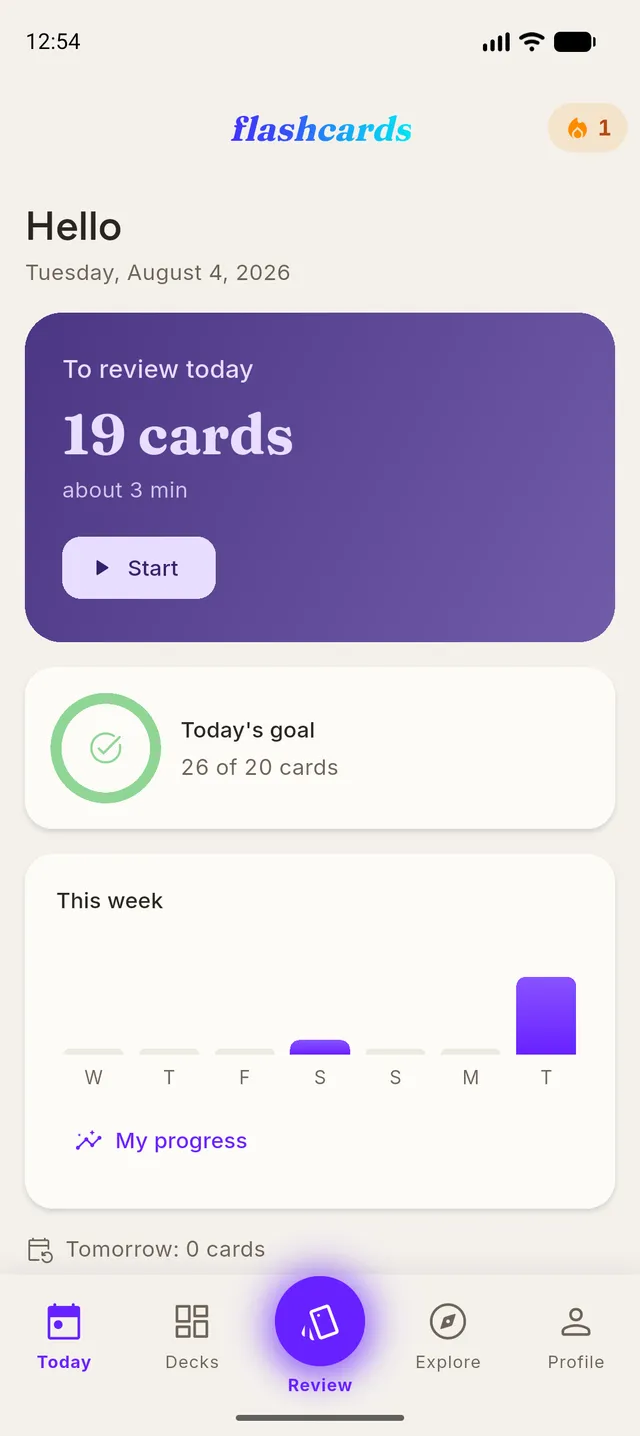
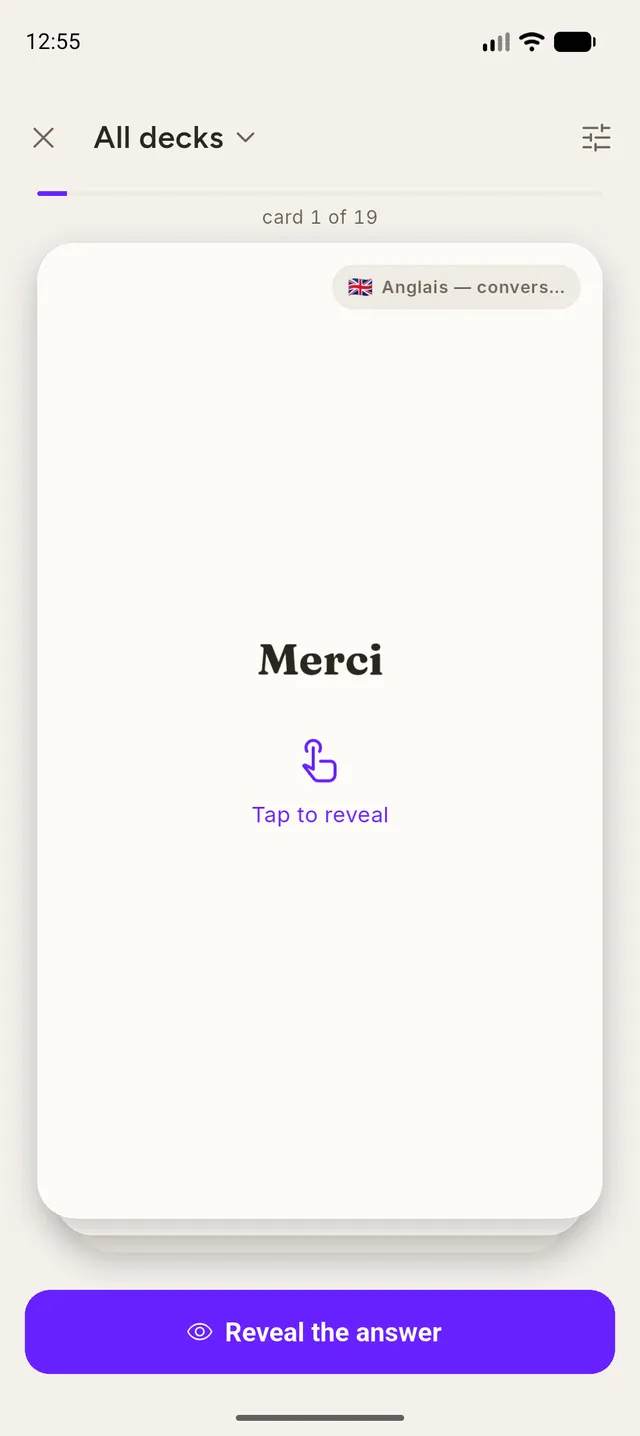
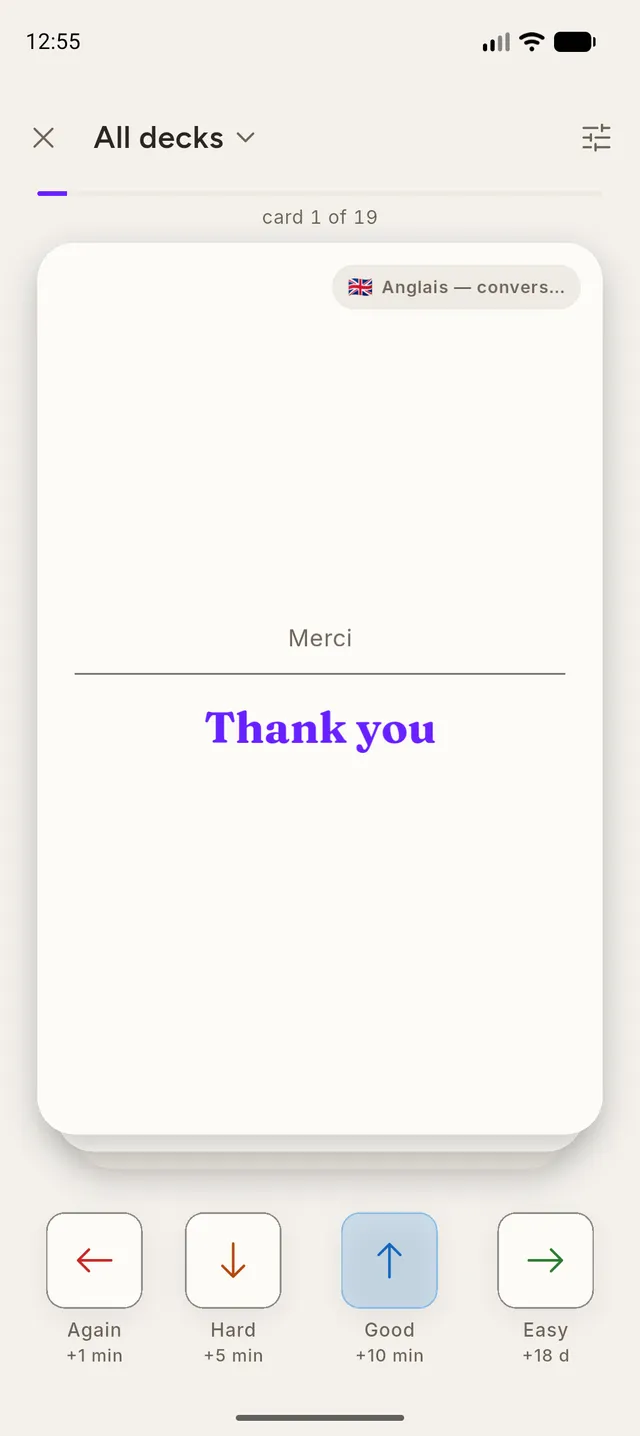
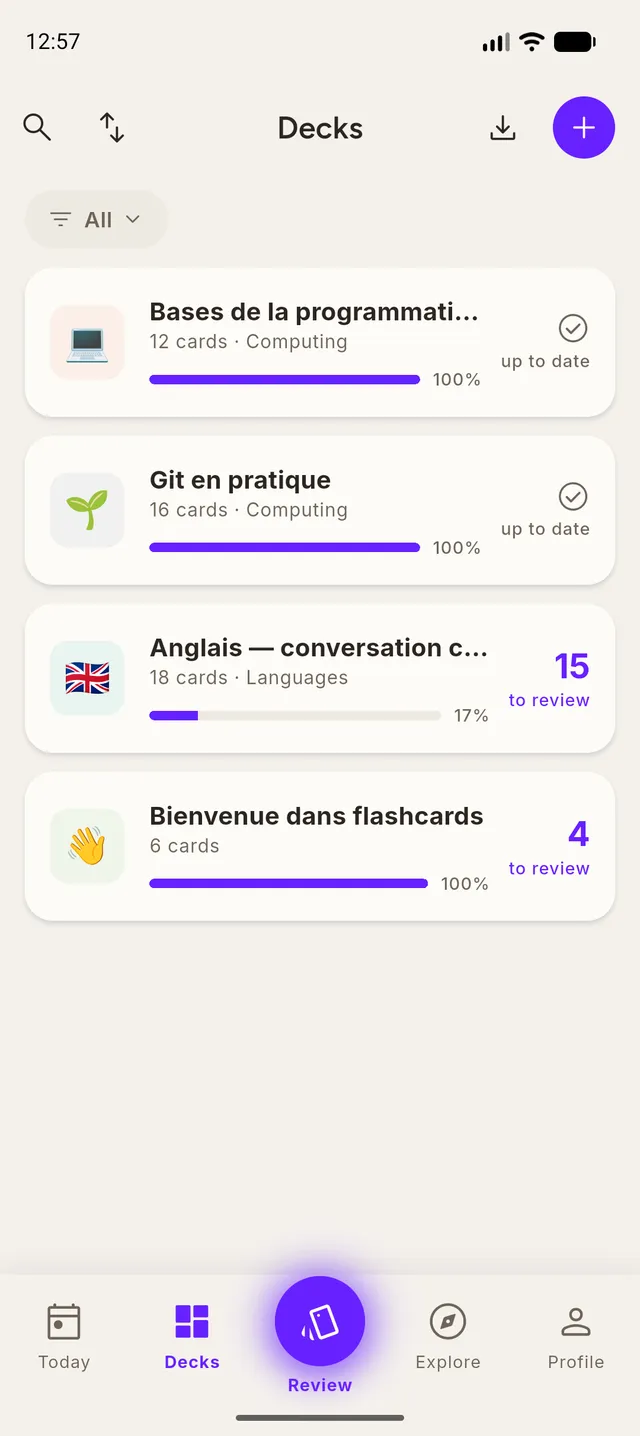
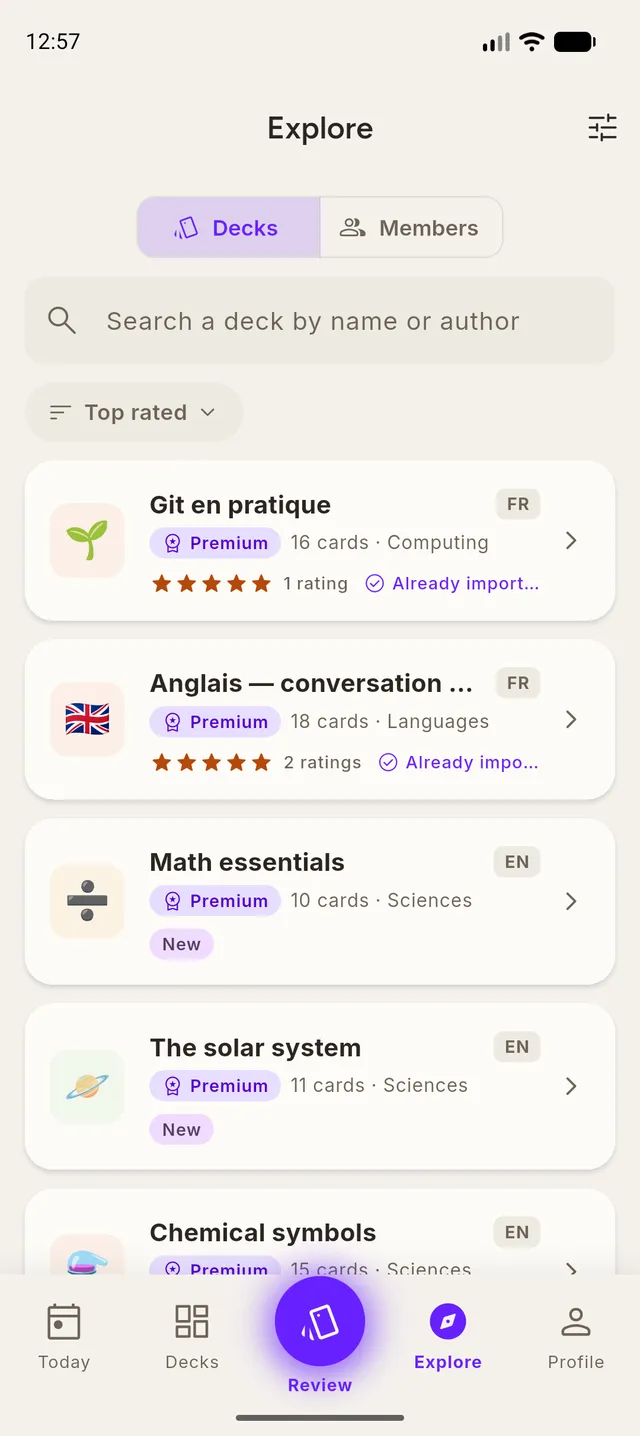
You show a QR code or read out a short code. The person facing you gets the deck, with no paid account and no middleman.
Publishing a deck is free. What is paid for is the directory: search, sorting, filters and ratings on decks published by others. Anki deck import included.
You revise on the underground, syncing happens when the network comes back. The interface follows your phone's theme.
US$0
For good
US$1.99
Per month
US$4.99
Per month
Subscriptions arrive with the opening of the community directory. Until then, everything listed as free is already in the app. Prices are those shown in the app and may vary by country on Google Play.
A language, an exam, some code. And if something is missing, write to me.